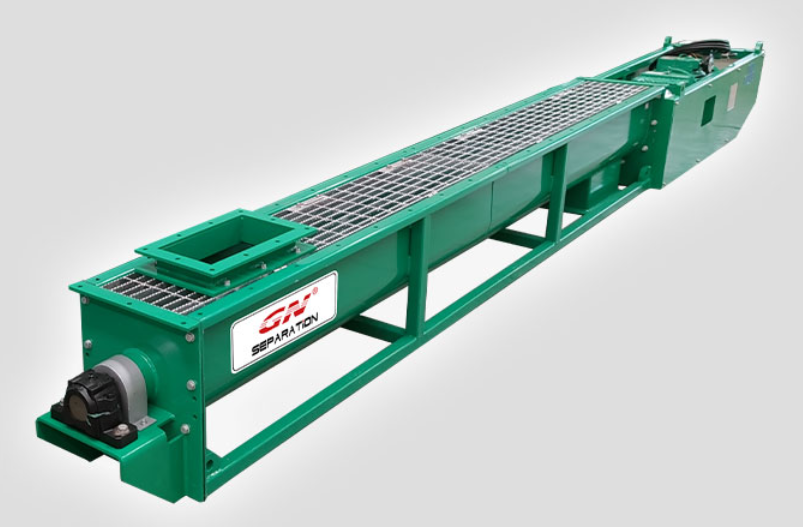
Sludge Dewatering Screw Press Package Ready for Shipment to European Client

GN Separation has recently completed the manufacturing and final inspection of a complete Sludge Dewatering Screw Press Package, which is ready for shipment to a European client. The supplied system includes a GN Screw Press GNDL303 and a GNSJY3000 Automatic Chemical Dosing Unit, providing an integrated solution for efficient sludge conditioning and dewatering.

Complete Sludge Dewatering Solution

Sludge management is a critical challenge for wastewater treatment plants and industrial facilities. Effective dewatering can significantly reduce sludge volume, lower transportation and disposal costs, and improve overall treatment efficiency.

The GN Sludge Dewatering Screw Press Package combines mechanical dewatering technology with automatic polymer preparation and dosing. The system is designed to continuously process sludge, improve solid-liquid separation, and produce a more concentrated and easier-to-handle sludge cake.

The package consists of:

GNDL303 Screw Press Dewatering Machine
GNSJY3000 Chemical Dosing Unit
Integrated control system
Sludge conditioning and dewatering components
GN GNDL303 Screw Press: Efficient and Reliable Sludge Dewatering

The GNDL303 Screw Press is designed for continuous sludge thickening and dewatering applications. It utilizes a slowly rotating screw mechanism combined with fixed and moving rings to generate progressive compression pressure, allowing water to be separated from sludge while maintaining low energy consumption.

Key advantages of the GNDL303 include:

1. Continuous Automatic Operation

The screw press system can operate continuously with minimal operator intervention. The integrated control system allows coordinated operation of sludge feeding, flocculation, thickening, and dewatering processes.

2. Low Energy Consumption

Compared with traditional sludge dewatering equipment, the screw press operates at a low rotational speed, resulting in reduced power consumption and lower operating costs.

3. Compact Design

The compact structure of the GNDL303 makes it suitable for wastewater treatment facilities where installation space is limited.

4. Stable Dewatering Performance

Through gradual compression and controlled pressure increase, the system effectively removes water from sludge and produces a concentrated sludge cake suitable for transportation, disposal, or further processing.

GNSJY3000 Chemical Dosing Unit: Optimizing Sludge Conditioning

Chemical conditioning plays an important role in sludge dewatering performance.

Before entering the screw press, sludge is mixed with prepared polymer solution. The polymer helps fine sludge particles form larger flocs, improving water release and enhancing separation efficiency.

The GNSJY3000 Chemical Dosing Unit is designed for automatic polymer preparation, maturation, and dosing. It provides stable chemical concentration and accurate dosing control, helping operators achieve consistent dewatering results.

Factory Preparation and Shipment

Before shipment, GN engineers completed the assembly, inspection, and functional checks of the complete package to ensure that all components meet project requirements.

The modular design allows easier transportation, installation, and commissioning at the customer’s site.

GN Separation continues to provide complete sludge treatment solutions for municipal wastewater, industrial wastewater, mining, and other environmental applications worldwide.

From individual dewatering equipment to complete integrated systems, GN works closely with customers to develop reliable and cost-effective solid-liquid separation solutions.

For more information about GN Sludge Dewatering Screw Press Package, please contact GN Separation.

GN Large Linear Vibrating Screen GNLS3073 Delivered to Domestic Mining Company

Enhancing Mining Efficiency with High-Capacity Screening Technology

GN Separation has recently completed the manufacturing and delivery of a Large Linear Vibrating Screen GNLS3073 for a domestic mining company. The equipment is designed to meet the demanding requirements of modern mineral processing operations, providing efficient screening performance, reliable operation, and long service life under continuous heavy-duty working conditions.

In mining and mineral processing applications, effective screening plays an important role in improving product quality, optimizing downstream processes, and reducing operational costs. With its large screening area and strong processing capability, the GNLS3073 Large Linear Vibrating Screen provides an ideal solution for high-volume material classification and separation.

Overview of GN Large Linear Vibrating Screen

The GN Large Linear Vibrating Screen is a high-capacity screening machine widely used in industries including mining, mineral processing, coal preparation, aggregate production, building materials, and chemical processing.

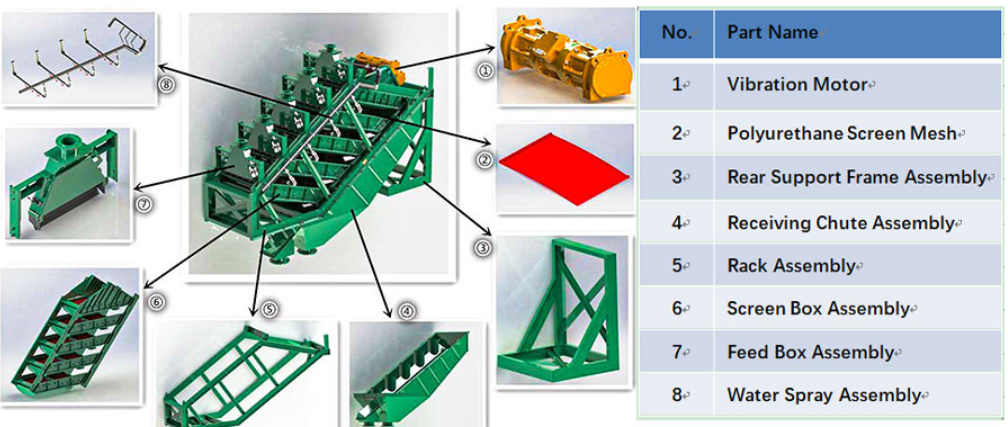
The equipment mainly consists of a box-type vibration exciter, screen box, vibration damping springs, support structure, and driving system. Through a forced synchronization vibration mechanism, the screen body moves in a linear trajectory, allowing materials to be evenly distributed and efficiently separated on the screen surface.

The linear motion design provides strong conveying force and stable material movement, helping achieve effective classification, dewatering, and desliming performance.

GNLS3073: Designed for Heavy-Duty Mining Applications

The GNLS3073 model is engineered specifically for large-scale mining operations where high throughput and robust structural performance are required.

Key advantages include:

1. Large Screening Capacity

With an optimized screening area and powerful vibration force, GNLS3073 can handle large volumes of mineral materials while maintaining stable screening efficiency. It is suitable for continuous operation in demanding mining environments.

2. Strong Structural Reliability

The screen structure adopts a heavy-duty design to withstand impact loads and long-term operation. High-strength materials and optimized structural design improve equipment durability and reduce maintenance requirements.

3. Efficient Material Separation

The linear vibration trajectory allows materials to move smoothly across the screen surface, promoting better material stratification and improving screening accuracy.

4. Flexible Configuration

The screen surface can be customized according to different process requirements, including single-layer or double-layer screening configurations. Screen panels can also be selected based on different material characteristics and particle sizes.

Advanced Design Features

GN Large Linear Vibrating Screens are developed with several design features to improve performance and reliability:

  • High-strength alloy steel screen structure with excellent impact resistance
  • Optimized vibration parameters through structural analysis
  • Gearbox-type vibration exciter with stable operation and long service life
  • Adjustable vibration amplitude according to different working conditions
  • Modular screen panels for convenient replacement and maintenance
  • Wear-resistant protection solutions for abrasive materials

These features allow GN vibrating screens to maintain reliable performance in harsh mining environments.

Wide Applications in Mining and Mineral Processing

GN Large Linear Vibrating Screens are commonly used in various process stages, including:

  • Wet screening
  • Dewatering
  • Desliming
  • Mineral classification
  • Tailings dry discharge
  • Coal processing
  • Sand and aggregate screening

By improving material separation efficiency, the equipment helps customers optimize production processes and achieve more stable operation.

Reliable Screening Solution from GN Separation

With extensive experience in solids control and separation technology, GN Separation provides customized screening solutions for mining and industrial applications worldwide.

The successful delivery of the GNLS3073 Large Linear Vibrating Screen demonstrates GN’s capability to manufacture high-performance screening equipment that meets the requirements of modern mining operations.

GN continues to focus on developing efficient, durable, and practical separation equipment to help customers improve productivity and achieve sustainable industrial development.

Sludge Dewatering Screw Press Package for Overseas Client

GN Separation Delivers Integrated Sludge Treatment Solution with GNDL302 Screw Press and GNSJY2000 Chemical Dosing Unit

With the increasing demand for efficient sludge management solutions worldwide, GN Separation continues to provide customized sludge dewatering systems for overseas wastewater treatment applications. Recently, GN Separation completed the manufacturing and preparation of a complete Sludge Dewatering Screw Press Package, including a GNDL302 Screw Press and a GNSJY2000 Chemical Dosing Unit, designed to help clients achieve efficient solid-liquid separation with reliable and continuous operation.

The complete package integrates sludge dewatering, polymer preparation, chemical dosing, and automatic control, providing customers with a compact and cost-effective solution for municipal and industrial sludge treatment.


Complete Sludge Dewatering Package

The supplied system consists of:

  • GN Screw Press Dewatering Machine – GNDL302
  • GN Chemical Dosing Unit – GNSJY2000
  • Automatic control system
  • Flocculation and sludge conditioning system
  • Sludge thickening and dewatering modules

By combining mechanical dewatering technology with precise chemical conditioning, the package improves sludge dewatering performance while reducing sludge volume and transportation costs.

GN screw press systems are widely applied in municipal wastewater treatment plants as well as industries including food processing, aquaculture, chemical production, paper manufacturing, and other applications requiring efficient sludge handling.


GNDL302 Screw Press – Efficient and Low-Maintenance Sludge Dewatering

The GNDL302 Screw Press is the core component of the sludge dewatering system. It adopts a slow-speed screw extrusion principle to achieve continuous solid-liquid separation.

During operation, sludge first enters the concentration section where gravity thickening occurs. As the sludge moves forward through the screw shaft, the gap between fixed rings and moving rings gradually decreases, creating increasing internal pressure. This pressure forces water to pass through the filtration gaps, while the concentrated sludge is continuously transported toward the discharge end to form a dewatered sludge cake.

Compared with traditional dewatering technologies, screw presses offer several advantages:

  • Low operating speed and low energy consumption
  • Reduced noise and vibration during operation
  • Continuous automatic operation
  • Low risk of clogging due to self-cleaning ring structure
  • Reduced maintenance requirements

The compact structure makes the screw press especially suitable for wastewater treatment facilities where space and operational simplicity are important considerations.


GNSJY2000 Chemical Dosing Unit – Optimizing Flocculation Performance

To maximize sludge dewatering efficiency, the package is equipped with the GNSJY2000 Chemical Dosing Unit.

Before entering the screw press, sludge is conditioned by adding polymer solution. The polymer helps fine sludge particles combine into larger flocs, improving settling characteristics and allowing more effective water separation during the mechanical dewatering process.

The GNSJY2000 provides:

  • Automatic polymer preparation and dosing
  • Stable chemical concentration control
  • Improved sludge flocculation performance
  • Reduced chemical consumption through accurate dosing

A properly designed chemical dosing system plays an important role in achieving stable dewatering performance and consistent sludge cake quality.


Compact Design for Overseas Installation

For overseas projects, equipment reliability, transportation convenience, and simple installation are key factors. GN Separation designs sludge dewatering packages with an integrated approach, ensuring that the screw press, dosing system, and control components work together as one complete treatment unit.

The compact footprint allows easier installation at wastewater treatment facilities with limited available space, while the automatic operation reduces the need for intensive manual supervision.


Supporting Global Sludge Management Solutions

GN Separation has supplied sludge dewatering screw press packages to international customers in different regions, providing complete solutions from equipment design and manufacturing to factory inspection and shipment preparation.

Through continuous improvement in separation technology, GN Separation aims to provide customers worldwide with efficient, economical, and environmentally friendly sludge treatment solutions.

For more information about GN sludge dewatering screw press systems, please contact GN Separation.

GN 30-Inch Bowl Diameter Decanter Centrifuge for Domestic Mining Slurry Concentration Application

Improving Mining Slurry Management with GN Large Bowl Decanter Centrifuge Technology

Mining operations generate large volumes of slurry during mineral processing, tailings management, and water recovery processes. Efficient solid-liquid separation plays an important role in improving process efficiency, recovering valuable water resources, and supporting more sustainable mining practices.

For a domestic mining slurry concentration application, GN Separation supplied a GN 30-inch bowl diameter decanter centrifuge, designed to provide continuous separation performance for large-scale slurry treatment requirements.

Large Bowl Design for High-Volume Slurry Processing

The GN 30-inch decanter centrifuge, also known as the GNLW764 series, features a 760 mm (30 inch) bowl diameter, making it one of GN’s larger decanter centrifuge models. The large bowl size provides a larger settling area, allowing the machine to handle higher slurry volumes with a single unit.

The equipment is suitable for applications including:

  • Mining slurry concentration
  • Tailings dewatering
  • Mineral processing wastewater treatment
  • Sand and aggregate washing slurry treatment
  • Industrial sludge dewatering

By applying centrifugal force, the decanter centrifuge continuously separates suspended solids from liquid, producing a concentrated solids discharge while recovering clarified liquid for further process use.

Designed for Mining Applications

Mining slurry often contains abrasive particles that can create challenges for separation equipment. GN decanter centrifuges incorporate wear protection features to improve equipment reliability in demanding applications.

For mining applications, critical wear areas such as the screw conveyor and solids discharge sections can be equipped with tungsten carbide protection to reduce abrasion caused by sand and mineral particles.

The robust design helps extend component service life and reduce maintenance requirements during continuous operation.

Variable Frequency Drive Control for Flexible Operation

The GN 30-inch decanter centrifuge can be equipped with a VFD control system, allowing operators to adjust operating parameters according to different slurry characteristics and treatment objectives.

The adjustable operating conditions provide flexibility when processing variations in:

  • Solids concentration
  • Particle size distribution
  • Slurry density
  • Required cake dryness
  • Liquid clarification performance

This flexibility helps operators optimize separation results based on actual site conditions.

Key Technical Features

Typical features of the GN 30-inch bowl diameter decanter centrifuge include:

  • Bowl diameter: 760 mm (30 inch)
  • Bowl length: approximately 3160–3328 mm depending on configuration
  • Maximum bowl speed: up to around 2650 RPM
  • Maximum centrifugal force: approximately 2900–3000 G
  • Control system: VFD + PLC + HMI
  • Bowl material options: stainless steel materials including SS2304, SS316, and SS2205
  • Wear protection: tungsten carbide tiles or hard-facing protection for abrasive applications

Final specifications can be customized according to the specific slurry characteristics and customer process requirements.

Supporting Efficient Mining Operations

Compared with traditional settling methods, decanter centrifuges provide a continuous mechanical separation solution with a compact footprint. For mining sites requiring improved slurry concentration, water recovery, or reduced handling of wet solids, a large bowl decanter centrifuge can provide an effective process option.

GN Separation continues to provide customized separation solutions for mining and industrial applications worldwide, combining equipment design, manufacturing capability, and application experience to support customers’ separation requirements.

Keywords: GN decanter centrifuge, 30 inch decanter centrifuge, mining slurry concentration, tailings dewatering centrifuge, mineral processing separation equipment, solid liquid separation.

GNLW554-VFD Decanter Centrifuge for Tank Bottom Sludge Treatment in Africa

Efficient Solid-Liquid Separation Solution for Challenging Oil Sludge Applications

Tank bottom sludge management has always been a major challenge for oil storage terminals and refineries. Due to long-term storage, crude oil tanks gradually accumulate a complex mixture of heavy hydrocarbons, water, sand, corrosion products, and fine solids at the bottom of the tank. This sludge is difficult to handle, requires significant manpower, and often creates high disposal costs.

To address these challenges, GN Separation supplied a GNLW554-VFD Large Bowl Decanter Centrifuge for an oil sludge treatment project in Africa, providing an efficient solution for continuous solid-liquid separation and sludge volume reduction.


Challenges of Tank Bottom Oil Sludge Treatment

Tank bottom sludge typically contains:

  • Heavy oil components
  • Fine suspended solids
  • Water phase
  • Sand and inorganic particles
  • Corrosion products from storage tanks

Due to its complex composition and high viscosity, conventional treatment methods often face difficulties including:

  • Low processing efficiency
  • Large sludge storage requirements
  • High transportation and disposal costs
  • Unstable separation performance

An effective treatment system requires equipment capable of handling variable sludge characteristics while maintaining stable operation.

GNLW554-VFD: High-Capacity Decanter Centrifuge Solution

The GN GNLW554-VFD decanter centrifuge is designed for continuoussolid-liquid separation applications where high throughput and reliable performance are required.

With its large bowl diameter design, the GNLW554-VFD provides enhanced processing capacity compared with smaller centrifuge models. The machine uses centrifugal force to separate solids and liquids continuously, producing a dewatered sludge cake while recovering separated liquid for further treatment or recycling.

Key features include:

1. Variable Frequency Drive (VFD) Control

The integrated VFD system allows operators to adjust:

  • Bowl speed
  • Differential speed between bowl and screw conveyor
  • Separation performance according to sludge characteristics

For oil sludge applications, feed properties can change significantly depending on oil content, water content, and solid concentration. Flexible speed control helps optimize separation results under different operating conditions.


2. Large Bowl Design for Higher Treatment Capacity

The GNLW554-VFD features a 550 mm bowl diameter, providing a strong balance between separation efficiency and processing capacity.

The larger bowl design offers:

  • Higher sludge handling capability
  • Longer retention time inside the centrifuge
  • Improved separation efficiency for complex industrial sludge

This makes it suitable for applications such as oil sludge treatment, industrial wastewater, and other high-solid-content separation processes.


3. Continuous Automatic Operation

Compared with batch treatment methods, decanter centrifuges provide continuous operation with:

  • Automatic solid discharge
  • Continuous liquid clarification
  • Reduced manual handling requirements

This helps oilfield and refinery operators improve productivity while reducing labor requirements.


Application Process Overview

A typical tank bottom sludge treatment process using the GNLW554-VFD includes:

Step 1: Sludge Collection

Oil sludge is removed from storage tanks and transferred to the treatment system.

Step 2: Conditioning

Chemical conditioning may be applied to improve separation performance by enhancing particle aggregation.

Step 3: Centrifugal Separation

The conditioned sludge enters the GNLW554-VFD decanter centrifuge.

Under high centrifugal force:

  • Heavy solids migrate toward the bowl wall
  • Liquid phase moves toward the center
  • The screw conveyor continuously transports separated solids toward the discharge end

Step 4: Final Handling

The separated solids are collected for disposal or further processing, while recovered liquid can be returned for additional treatment.


Supporting Sustainable Oil Waste Management in Africa

Many African oil and energy projects operate in challenging environments where equipment reliability, low maintenance requirements, and efficient waste reduction are critical.

The GNLW554-VFD provides:

✓ Continuous operation
✓ Adjustable separation performance
✓ Reduced sludge transportation volume
✓ Improved waste management efficiency
✓ Compact installation footprint

By applying advanced centrifuge technology, oil storage facilities can improve environmental compliance while reducing overall operating costs.


Conclusion

The treatment of tank bottom oil sludge requires reliable separation technology capable of handling complex and variable waste streams. The GNLW554-VFD Large Bowl Decanter Centrifuge provides an efficient and flexible solution for oil sludge dewatering and volume reduction.

Through advanced VFD control, robust mechanical design, and continuous separation capability, GN Separation supports customers worldwide in achieving more efficient and sustainable sludge management.