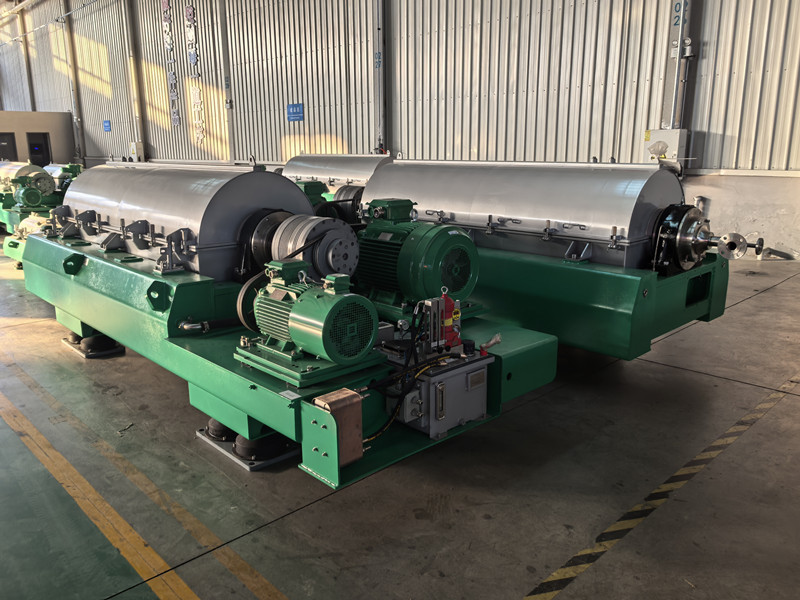
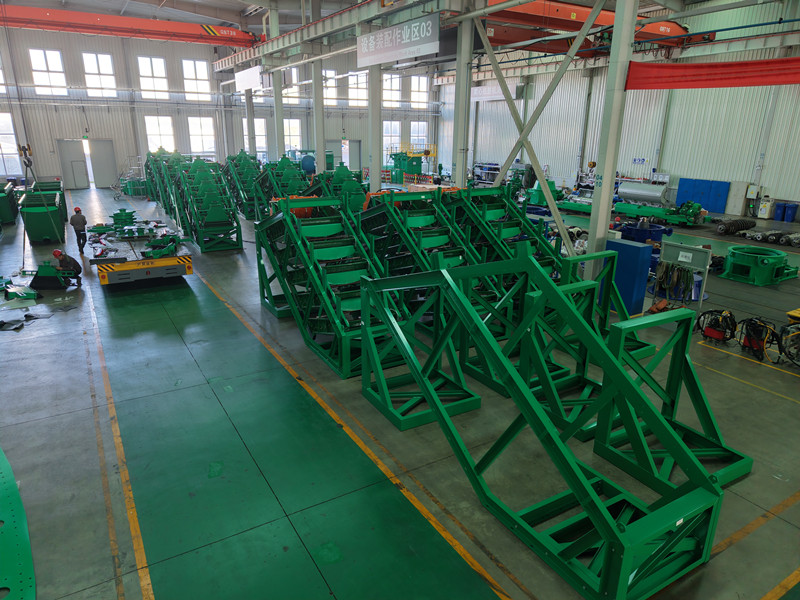
4 Units GNLW554-VFD Dewatering Centrifuge Delivered to an Overseas Sewage Treatment Plant

GN Separation recently completed the delivery of four units of GNLW554-VFD dewatering decanter centrifuges to an overseas municipal sewage treatment plant. This project marks another milestone in GN’s continuous effort to support global wastewater treatment facilities with reliable solid-liquid separation solutions.

Enhancing Sludge Dewatering Efficiency

Municipal wastewater treatment plants generate large volumes of sludge every day. Efficient dewatering is essential to reduce sludge volume, lower transportation and disposal costs, and improve overall treatment performance.

The GNLW554-VFD decanter centrifuge is specifically engineered for high-capacity sludge dewatering. Its large-diameter rotating bowl and optimized beach angle enable effective separation, even with materials containing high moisture and complex solids content.

Key performance strengths include:

  • Large processing capacity suitable for municipal and industrial sludge

  • High separation efficiency supported by a long bowl length-to-diameter ratio

  • Stable operation under continuous heavy-duty working conditions

  • Lower polymer consumption compared to traditional dewatering methods

These advantages make the GNLW554-VFD an ideal choice for medium to large wastewater treatment facilities.

VFD Control System for Process Flexibility

All four units are equipped with a Variable Frequency Drive (VFD) control system. This allows users to adjust bowl speed, differential speed, and feed rate based on the characteristics of the sludge.

Benefits of the VFD system include:

  • Precise control of separation performance

  • Energy efficiency through optimized motor speed

  • Capability to handle varying sludge conditions throughout the day

  • Automatic protection functions, including vibration monitoring and overload alarms

For wastewater plants that operate around the clock, such flexibility greatly improves cost-effectiveness and reliability.

Robust Materials for Municipal Wastewater Applications

The GNLW554-VFD centrifuge is built with corrosion-resistant materials suitable for the challenging environment of sewage treatment plants. Typical material configurations include:

  • Stainless steel bowl and scroll manufactured by centrifugal casting

  • Tungsten carbide protection on wear-prone components

  • High-quality bearings from internationally recognized suppliers

  • Optional duplex stainless steel or super duplex materials for aggressive wastewater conditions

This ensures long service life and reduced maintenance requirements.

Supporting Global Wastewater Treatment Projects

GN Separation has been supplying decanter centrifuges to various municipal and industrial wastewater projects around the world. The successful delivery of these four GNLW554-VFD units further demonstrates GN’s capability to support international partners with professional equipment and technical expertise.

With growing global attention on safe water treatment and environmental protection, GN Separation remains committed to providing efficient, reliable, and user-friendly solid-liquid separation solutions.

Unlocking Efficiency: GN Separation’s 13 Units of 5-Deck Stack Vibrating Screens for Ilmenite Ore Classification

As mineral processing projects continue to demand higher efficiency and finer classification, GN Separation is proud to announce the delivery of 13 units of 5-deck stack vibrating screens for a large-scale ilmenite ore classification project. This milestone highlights GN’s commitment to providing reliable, high-performance screening solutions for the miningindustry.

Importance of Accurate Ilmenite Classification

Ilmenite is a major titanium-bearing mineral used widely in the production of titanium dioxide, a key material for paints, coatings, plastics, and aerospace applications. Effective classification during ore preparation is essential to ensure high recovery rates and stable product quality. GN’s multi-deck screening technology is designed to meet these demands by offering high-capacity, fine particle separation in a compact configuration.

Key Features of GN’s 5-Deck Stack Vibrating Screen

GN’s stack vibrating screen—also known as a stack sizer—is specifically developed for wet screening and fine classification of mineral ores. Each of the 13 units supplied for this project incorporates the following features:

1. High-Efficiency Multi-Deck Design

Each screen consists of five individual screening decks, allowing simultaneous separation of multiple size fractions while maintaining a small footprint.

2. High-Frequency Linear Vibration

Driven by two synchronized vibration motors, the screen operates through a two-degree-of-freedom resonance system. This design achieves high vibration strength, reduces screen blinding, and improves separation efficiency for fine and challenging materials.

3. Durable Polyurethane Screen Mesh

Each deck is equipped with high-strength polyurethane (PU) mesh panels known for their flexibility, anti-blocking performance, and long service life.

4. Modular Construction for Easy Maintenance

The feeding distribution box and screen frames are modular and easy to assemble or replace, enabling maintenance on individual decks without disassembling the entire unit.

5. Enhanced Wear and Corrosion Resistance

The screen surfaces are coated with a protective layer, and all structural components are treated to withstand abrasive and corrosive mining environments.

Benefits for Ilmenite Processing

For ilmenite classification, GN’s 5-deck stack vibrating screen provides several key advantages:

  • Stable and accurate particle size separation

  • Efficient handling of high-throughput slurry

  • Reduced processing footprint due to vertical stacking

  • Lower operating and maintenance costs through a durable, service-friendly design

  • Improved downstream performance for magnetic separation or flotation

By using multi-deck high-frequency screening, mineral processors can achieve higher recovery rates and better product consistency—critical factors in titanium ore beneficiation.

Supporting Global Mining Projects

With manufacturing facilities, engineering centers, and service teams in multiple regions, GN Separation continues to support global mining clients with customized screening solutions and responsive after-sales support. The successful delivery of these 13 screening units further strengthens GN’s role as a trusted partner in the mineral processing industry.

GNLW364-VFD Dewatering Centrifuge for Overseas Pharmaceutical Plant Wastewater Treatment

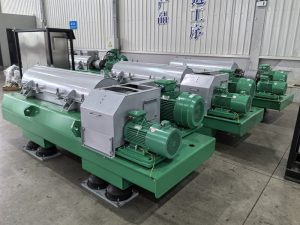
IntroductioIn the pharmaceutical industry, wastewater streams often pose complex separation challenges. High levels of organics, biological materials, fine solids and chemical residues must be treated efficiently to meet regulatory and environmental standards. The GN Separation GNLW364-VFD decanter centrifuge addresses these challenges with a design focused on dewatering and reliable performance in demanding applications. According to GN’s recent news, a batch of GNLW364 units has been assembled for shipment to an overseas pharmaceutical plant wastewater treatment project. Why a High-Performance Dewatering Centrifuge Matters
For pharmaceutical wastewater, the solids content may vary, particle sizes can be fine, and the sludge may include aggressive chemicals and solvents. Using a robust decanter centrifuge helps:

  • Reduce sludge volume and footprint of sludge disposal.

  • Recover clarified water for reuse or safer discharge.

  • Increase solids dryness, improving transport and disposal cost efficiency.

  • Manage variations in feed (viscosity, density, concentration) thanks to advanced control systems.

According to GN’s site, decanter centrifuges perform well where high throughput, high dryness, and reliable operation are required.

Key Features of the GNLW364-VFD Model

Here are some of the standout features of the GNLW364-VFD (and related models) that make it well suited for pharmaceutical plant wastewater treatment:

1. Duplex stainless steel bowl (SUS 2205) construction
The bowl and screw end caps are made of duplex stainless steel (SUS 2205 or SUS 2304) produced via centrifugal casting. This provides superior corrosion resistance and mechanical strength compared to SUS 304 or SUS 316.

2. Wear ­protection via tungsten carbide sleeve & special screw blade design
The screw conveyor’s blade is pressed rather than drawn, improving conveying efficiency. A hard tungsten carbide sleeve protects the solids discharge port from abrasion. These design aspects support longer service life—critical when handling abrasive particulates, chemical sludges or mixed wastewater streams.

3. Optimised geometry – 8.5° beach angle, long drying zone
The T‐series dewatering decanter (which includes models like GNLW364) uses a beach angle of 8.5°, which lengthens the drying zone of the bowl and enhances dewatering performance (i.e., drier cake, clearer liquid).

4. Variable Frequency Drive (VFD) control & monitoring
The “VFD” designation highlights the use of variable frequency drives, enabling fine tuning of bowl speed, screw (differential) speed and feed pump rate. Real‐time monitoring of temperature, vibration, lubrication and other key parameters improves operational safety and consistency of performance.

5. Turnkey capability & customisation
GN states that besides supplying the dewatering decanter centrifuge, they can deliver full dewatering solutions—including material transport, classification and dewatering systems. This is especially valuable for complex wastewater treatment setups in the pharma sector.

Application in an Overseas Pharmaceutical Plant

In the referenced project, GN has assembled GNLW364‐VFD units destined for a pharmaceutical client’s wastewater treatment facility.

Here’s how the features align with typical pharma‐waste water demands:

  • Chemical & biological solids: Pharmaceutical wastewater can contain residuals from active pharmaceutical ingredients (APIs), excipients, solvents, biological media and fine solids. The high-G-force and efficient screw conveyance of the GNLW364 help manage these.

  • Abrasion & corrosion risks: With mixed chemicals and potentially abrasive particulates, the use of duplex stainless steel and wear protection ensures longevity.

  • Fluctuating feed conditions: Flow rates, solid concentrations and sludge characteristics change over time. The VFD control allows the decanter to adapt.

  • Regulatory and reuse demands: Pharmaceutical sites often target water reuse, meaning clarified effluent quality is important. The longer pool depth and extended dewatering shell improve clarity as well as dryness.

  • Minimised downtime & labour: Features like hydraulic disassembly for main bearings, gas‐spring assisted lids, and automatic lubrication support easier maintenance and operational reliability.

Benefits for the Client

By deploying the GNLW364-VFD, a pharmaceutical plant can expect:

  • Lower disposal costs: Drier solids mean less volume and lower transport/disposal costs.

  • Water recovery: Higher clarity liquid can be reused or discharged with less treatment.

  • Operational efficiency: Automation and monitoring reduce manual maintenance and risk of failure.

  • Durability: Premium materials and wear protection lower lifetime maintenance costs.

  • Tailored solution: A decanter designed and sized according to actual sludge characteristics ensures better performance than a generic machine.

Considerations for Implementation

While the equipment offers many strengths, proper implementation is essential:

  • Accurate feed characterisation: Particle size, specific gravity, viscosity, solids concentration and fouling risk must be assessed to select the right screw pitch, beach length, differential speed and pool depth.

  • Flocculation/pre‐treatment: As the GN spec states, fine particles may need flocculants to aggregate before dewatering.

  • Maintenance access and wear part planning: Even with wear protection, scheduled maintenance and spare part strategies should be in place (screw flights, tungsten carbide liners, bearings).

  • Control integration: The VFD/PLC/HMI system should be integrated with the plant’s control architecture and operators trained.

  • Waste stream variability: For pharmaceutical plants, seasonal or batch variations may occur; flexible control helps but oversight and process tracking are key.

Conclusion

For a pharmaceutical wastewater treatment application overseas, the GNLW364-VFD dewatering decanter centrifuge from GN Separation delivers a purposeful combination of durability, flexibility, and performance. Its design is aligned with the demands of the pharma sector—fine solids, variable streams, high regulatory expectations—and it supports water reuse and sludge volume reduction goals.

If you’re involved in wastewater treatment for a pharmaceutical plant or managing separation challenges, diving into the GNLW364-VFD’s specifications, conducting a site‐specific evaluation, and working with a supplier who offers full system support (as GN does) can set you up for success.